The story of Vastu ShastraBefore the plan, there was a being.He hid the sky.
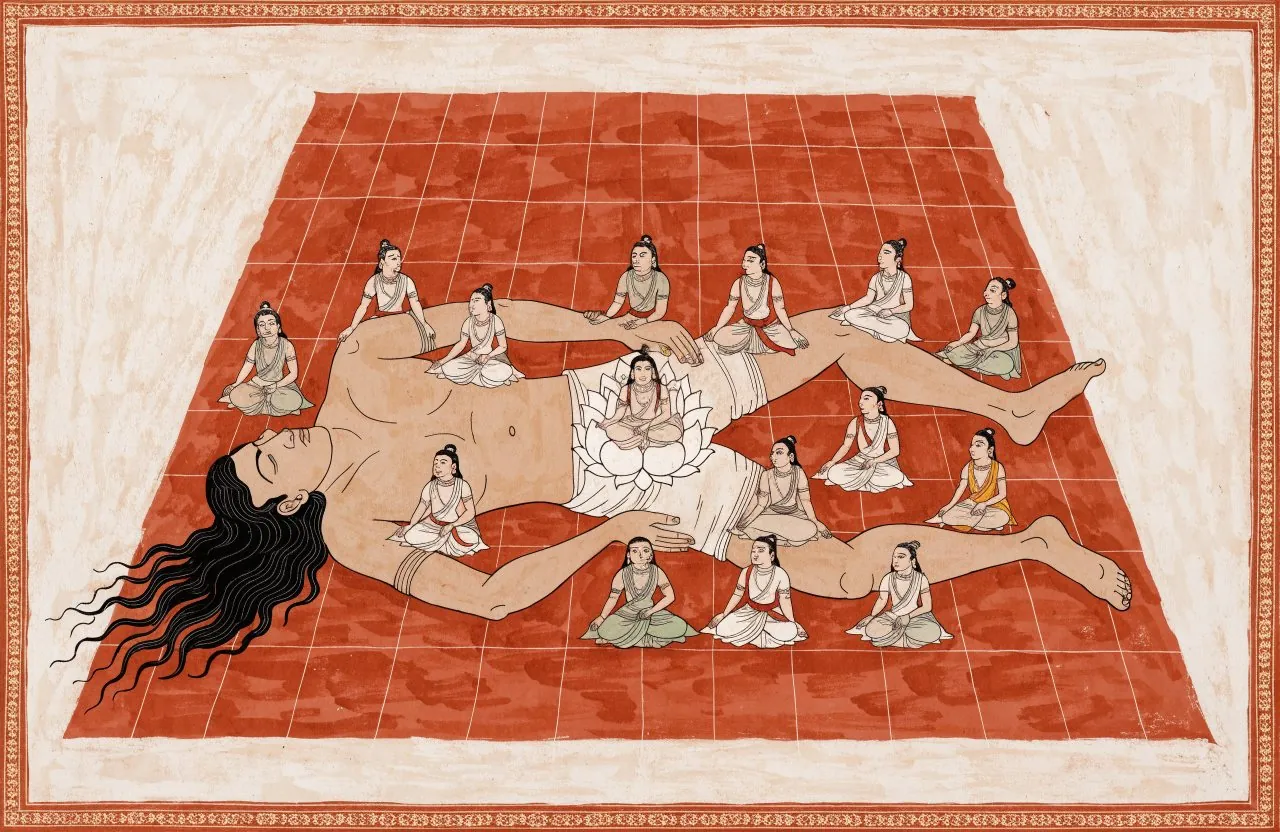
The old texts tell of a being so vast that he covered the earth and the sky.
The gridThe gods laid him flat.Each took a square.
Forty-five keepers on a grid of eighty-one squares. He lies under every building, and they still hold him there.
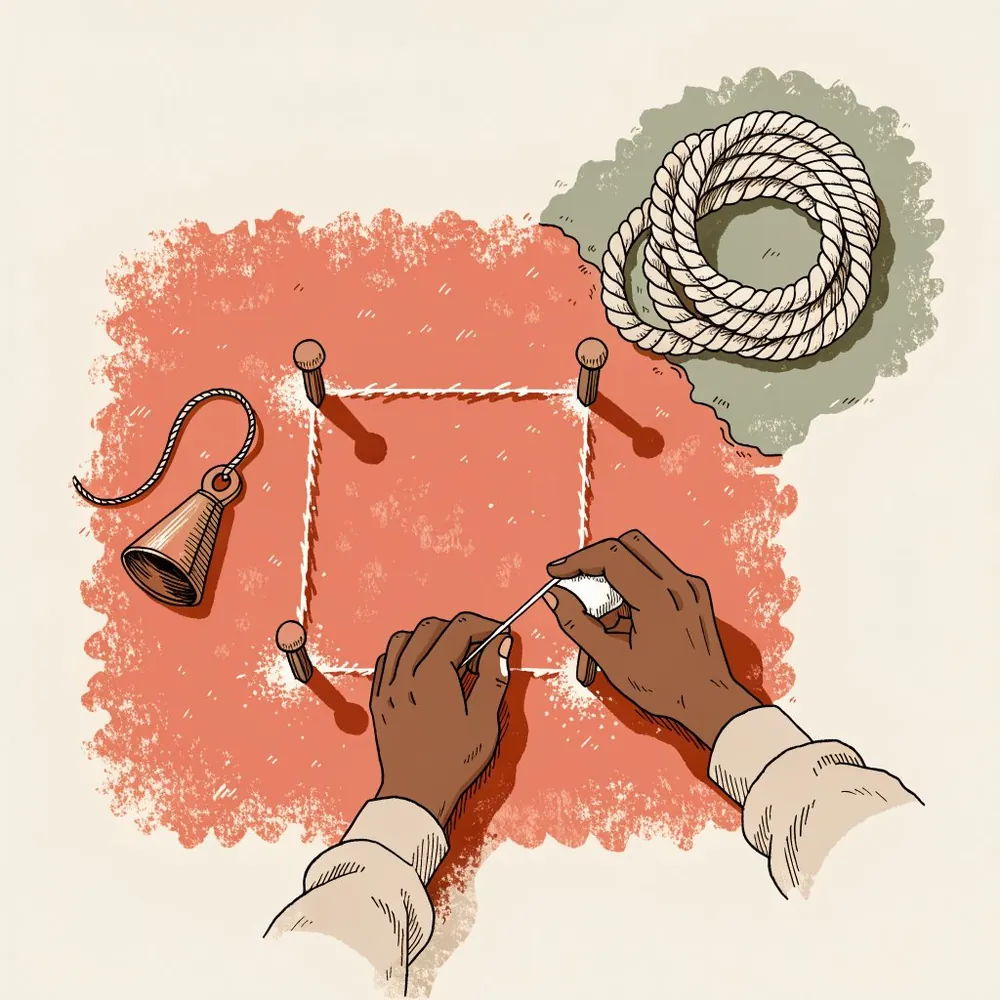
Your plotFour pegs, one rope.Now lay out yours.
That grid is how a plot is still read. Start with the way your front door faces.
Which way does your front door face?
Scroll to turn the dial, or tap a direction.
Plot Setup
Length (ft)
Breadth (ft)
Plot facing (which side faces the road?)
Facing: North (N)
Vastu Grid
Ground Floor
🧭Tap any zone to see Vastu science and place a room
Vastu Report
Room-by-room score, direction, and science
Scores are based on Vastu Shastra principles interpreted through sun path, wind flow, and structural logic.
Place rooms on the grid above to see your Vastu score
0
/ 100
Room Palette — Drag to place on grid
On mobile: tap any zone on the grid above to assign a room
Vastu Analysis
The plan changed after this report was made - generate it again to update it.
This analysis is AI-generated based on classical Vastu principles and spatial science. Always consult a qualified architect or Vastu expert for major construction decisions. NirmanDost provides this as spatial guidance, not as professional advice.
The story of Vastu, a free book
The Vastu Purusha, the grid of forty-five gods and the principles for a home, with references to the old texts and modern studies.
Tap a card to flip a common belief and see the practical thinking behind it — the sun, the air, and the way a home is used.
The five elements
Every direction has an element
Vastu places a home around the pancha bhutas, the five great elements, each ruling a direction of the plan.
Earth
Prithvi
South-west
Weight and stability — the heavy rooms and the master bed.
Water
Jal
North-east
Clarity and light — kept open, calm and sacred.
Fire
Agni
South-east
Heat and transformation — the corner for the kitchen.
Air
Vayu
North-west
Movement — circulation, guests and storage.
Space
Akash
Centre
The open Brahmasthan — the home's breathing core.
The eight guardians
Ashta Dikpalas — who holds each direction
In tradition, each of the eight directions has a guardian deity, a dikpala, whose nature shapes how that part of a home is used.
N · Uttara
Kubera
Wealth and prosperity — treasured, and kept open to the north.
NE · Ishanya
Ishana
Shiva's corner — knowledge, clarity and the sacred; kept light.
E · Purva
Indra
The rising sun and authority — new beginnings and entrances.
SE · Agneya
Agni
Fire and energy — the natural corner for the kitchen.
S · Dakshina
Yama
Order and discipline — steady, protective, solidly built.
SW · Nairutya
Nirriti
Grounding and stability — the heaviest, most solid corner.
W · Paschima
Varuna
The waters — gains, calm and reflection; good for rest.
NW · Vayavya
Vayu
Wind and movement — guests, circulation, things in transit.
Quick tips
NEKeep the north-east open and light — it's your calmest, best-lit corner.
SEGive the kitchen morning sun; it dries damp and keeps things hygienic.
SWPut the heaviest rooms in the south-west — it takes the load and the heat.
AIRWindows on opposite walls give cross-ventilation; a home that breathes barely needs AC by day.
LIGHTNorth light is soft and steady all day — ideal for a study or workspace.
CENTRELeave the middle of the plan open; it works like a chimney for hot air.
Did you knowVastu Shastra comes from the Sthapatya Veda, part of the ancient Vedic texts, among the world's oldest writings on architecture.tap for another →
Choose Room
Nirman AI
● Vastu · spatial science · IS codes
5
Ask the Vastu expert:
Spatial science Traditional Vastu Practical remedies